Total Pageviews

10/16/13

Awesome PC Case Mods

 Unique Banana Art made by Piercing All Pin
 
Computers come in many different flavours, but apparently that ain’t enough for everybody. Case modding -the modification of a computer chassis- has become a big hobby for thousands of enthusiasts around the world. Meet some of the best PC Case Mods we've seen.

 
TIE Fighter by David Barry 

 
Bender by Jan Erik Vangen 

 
Whiskey Bottle by Janos Marton 

 
Kana by Katsuya Matsumura 

 
Hulk PC by Chris Blarsky 

 
R2-D2 by Ken Kirby 

 
WMD II by G-gnome 

 
Moo Cow Moo by Stan Maynard 

 
Atlas Mech by Don Soules 

 
Microwave PC 

 
Maid PC 

 
Heineken PC 

 
Windows XP Box PC By Andy France 

 
Atari 800 ITX by Andy Hutson 

 
Underwood No. 5 by Joel Zahn

 
BBQ PC by Dean Liou 

 
Coffin PC at QuakeCon 2005 

 
Optimus Prime by John Mangus 

 
Toaster

 
Gramaphone PC by Tony Greenberg
.

Hidden Artworks Painted on the Edges of Books


10/13/13

Astronomers Discover Lone Planet with No Star


Astronomers Discover Lone Planet with No Star

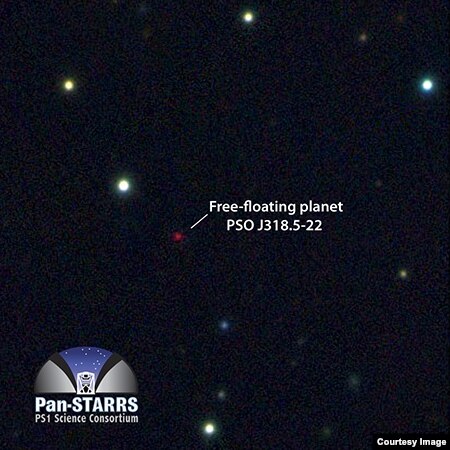
Multicolor image from the Pan-STARRS1 telescope of the free-floating planet PSO J318.5-22, in the constellation of Capricornus. The planet is extremely cold and faint, about 100 billion times fainter in optical light than the planet Venus. (N. Metcalfe &

RELATED ARTICLES

Lack of Methane Deals Blow to Martian Life Theory

The lack of methane gas does not completely rule out the possibility of life

New Research Could Lead to Particle Accelerator on a Chip

Scientists think development that could have far-reaching implications for science and medicine

Powerful Volcanoes Raise New Questions About Ancient Mars

Finding raises fresh questions about conditions on Mars in its early years, when scientists believe planet was much more Earth-like
TEXT SIZE 
VOA News
Astronomers have discovered a lone planet, floating in space without a star.

This free-floating planet, dubbed PSO J318.5-22, is just 80 light  years away from Earth and has a mass six times that of Jupiter. The planet is only 12 million years old—a newborn in planet lifetimes.

"We have never before seen an object free-floating in space that that looks like this. It has all the characteristics of young planets found around other stars, but it is drifting out there all alone,” explained team leader Dr. Michael Liu of the Institute for Astronomy at the University of Hawaii at Manoa. “I had often wondered if such solitary objects exist, and now we know they do.”

Exoplanets are being discovered at an astounding pace, with about a thousand found by indirect methods such as wobbling or dimming of their host stars induced by the planet. However, only a handful of planets have been directly imaged, all of which are around young stars, usually less than 200 million years old.

Artist's conception of PSO J318.5-22. (MPIA/V. Ch. Quetz)Artist's conception of PSO J318.5-22. (MPIA/V. Ch. Quetz)
While the discovery of a starless planet alone is noteworthy,  scientists think PSO J318.5-22 will provide insight into how the so-called gas giant planets such as Jupiter and Saturn develop.

“Planets found by direct imaging are incredibly hard to study, since they are right next to their much brighter host stars. PSO J318.5-22 is not orbiting a star so it will be much easier for us to study. It is going to provide a wonderful view into the inner workings of gas-giant planets like Jupiter shortly after their birth,” said Dr. Niall Deacon of the Max Planck Institute for Astronomy in Germany and a co-author of the study.

PSO J318.5-22 was identified from its faint and unique heat signature by the Pan-STARRS 1 (PS1) wide-field survey telescope on Haleakala, Maui. Follow-up observations using other telescopes in Hawaii show that it has properties similar to those of gas-giant planets found orbiting around young stars.